How to repair, re-purpose, re-dye and care for your clothes and be more sustainable in your clothing choices.
Yesterday, I wore a turquoise sleeveless shift dress. It was hot, and I appeared cool in the heat. The colour is perfect for me, especially with a tan, and the turquoise suede t-bar sandals and turquoise jewellery pulled it all together. I received many compliments.
The great thing is, that dress has been in my wardrobe for more than 20 years. I love it and wear it every summer. It started life mid-calf and then about 15 years ago I shortened it to knee length to make a change. It was a budget bu in a high street store one lunch break when I worked in investment banking in London and, as I recall, cost me around £10.00. The cost per wear must be in the negative pennies by now, even taking into account the cost of home machine dyeing three times in its life.
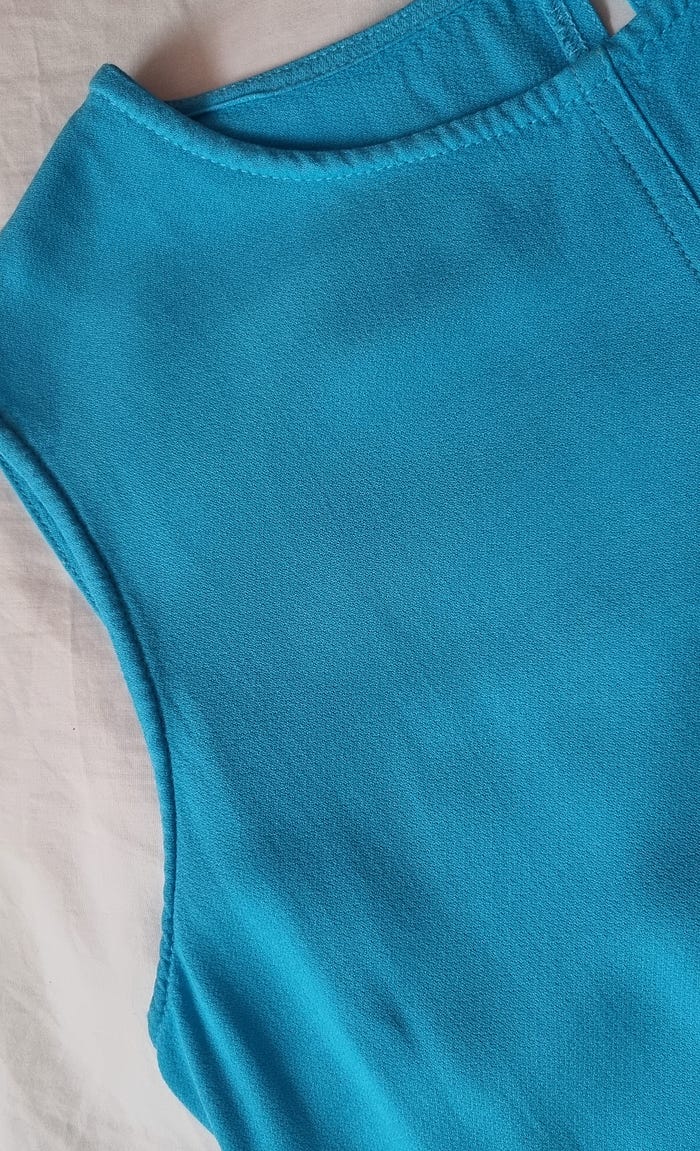
The reason I get so many compliments when I wear it is due, not only to it being bang on my style but also the colour. It’s one of the Wow! colours in my colour palette, and, although simple and plain, it’s striking, vibrant and noticeable. The most recent dyeing brought it back to its original glory once again.

Dyeing faded clothes is one way to give a loved item a new lease of life. Dyeing the same colour is usually successful but if you are dyeing to a different colour always go to a darker shade and watch out for synthetic thread used on natural fibres. Another thing to avoid is putting too many items in the machine at one time, this will cause a patchy result.
A polyester thread is often used on natural fibre garments and will not take the dye, so you could end up Dyeing a pale blue Tee to dark blue and the stitching will stay light blue for instance. However, if the garment is well constructed and the stitching is even and well-finished, this can look good. Be sure to check it over carefully beforehand.

The golden thread on denim is synthetic for this reason and so dyeing works especially well on denim. I dyed my Eddie Bauer denim jacket to restore it. The stitching stays undyed which is perfect. Dylon has a specific dye for denim.
Is dyeing your clothes more in line with #SustainableMe than buying new?
In 2021 Dylon launched its Re-Dye Don’t ReBuy campaign.
Did you know that re-dyeing a pair of jeans rather than purchasing a new pair saves up to 20 kilograms of carbon dioxide production, which is the equivalent of a one-way flight From London to Madrid?
Dylon say “By using Dylon Dyes it is possible to make your old clothes look colourful and brand new again, so we teamed up with sustainable fashion guru Kavita Donkersley of ‘SheWearsFashion’ Kavita | Fashion & Life (@shewearsfashion) • Instagram photos and videos to create our first capsule collection!”
Although two years old as I write this, the sustainable factor is even more relevant today. The downloadable research document commissioned in June 2021 concludes:
… from a carbon footprint perspective, the evidence is overwhelming that using
a DYLON Machine Dye to re-dye a faded item and keeping it for longer is considerably better for people and planet.
The data shows that in the UK it is 6-13 times better to re-dye your black jeans than buy new even taking into account the pre-wash and the after-dyeing washing cycles needed.
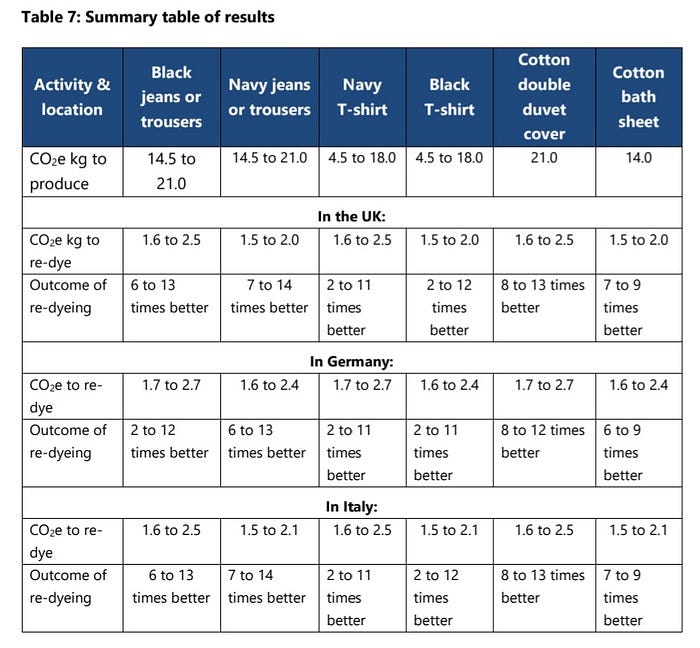
Fast Fashion versus DYLON Fabric Dyes.
Report by The Green Consultancy. June, 2021
https://publisher.henkel-dam.com/bin/dl?950fab19-4c2f-4990-87b2-c8f9427f0c18.pdf
Repair, alter and upcycle
Oftentimes clothes are discarded because they are damaged or worn. If you have a garment which is otherwise wearable there are many ways with a little ingenuity or skill it can be repaired or re-imagined
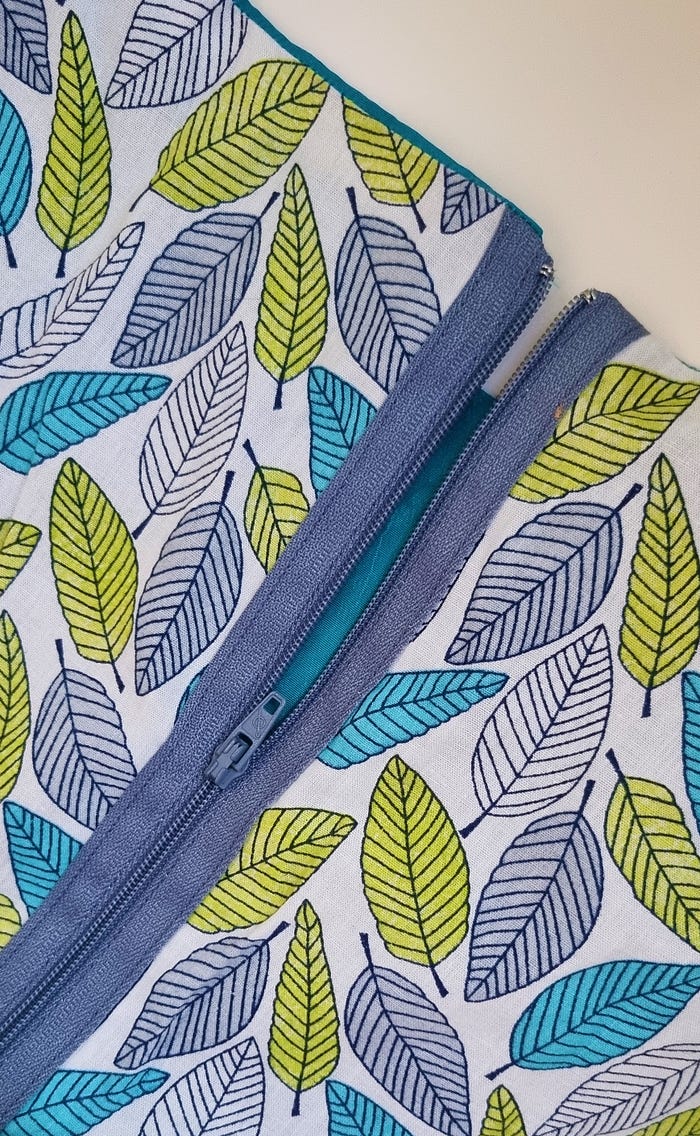
A new zip is simplicity itself to an accomplished seamstress, a replacement or creative use of a different colour, making a feature of the zip or placing it on the outside of a garment can bring a new aspect to the garment.
A burn mark or a stain could be covered with a beautiful brooch, patch or embroidery.
Alterations are a really cost-effective way of re-purposing your existing clothes or those you get from a second-hand store.
Shorten a dress and change the straps to halter-neck — give clothes a different look instead of buying new ones.
Make a dress into a skirt, remove the sleeves from a jacket and wear it with a funky belt, change the buttons, and shorten worn sleeves to three-quarters length.

Upcycle your clothes by altering and embellishing. The possibilities are endless.
Taking care of your clothes will lengthen their life and reduce your cost per wear.
Unless we are talking about the hole created by your iPhone in the pocket of the jeans you wear every day, it’s fair to say that wearing your clothes is not what wears them out. It’s the frequent washing or the lack of maintenance. Taking care of your clothes is a real investment.
Shoes
Polish new shoes before you wear them. They have been sitting in a box and then on the shelf in the store getting dehydrated for maybe as long as a year before you buy them. Give them a good layer of wax polish and leave them overnight before you buff them and put them on, this prevents the leather from creasing badly and helps to retain their condition.
Put shoe trees in shoes when you take them off or stuff them with paper. Do this when they are warm and it will help to restore the shape and form of the shoe. It’s a good time to polish them too. Wooden shoe trees are best as they absorb moisture. Clean your shoes with a damp cloth and warm soapy water to get rid of any grit, otherwise, the polish will rub the grit into the leather and create scratches.
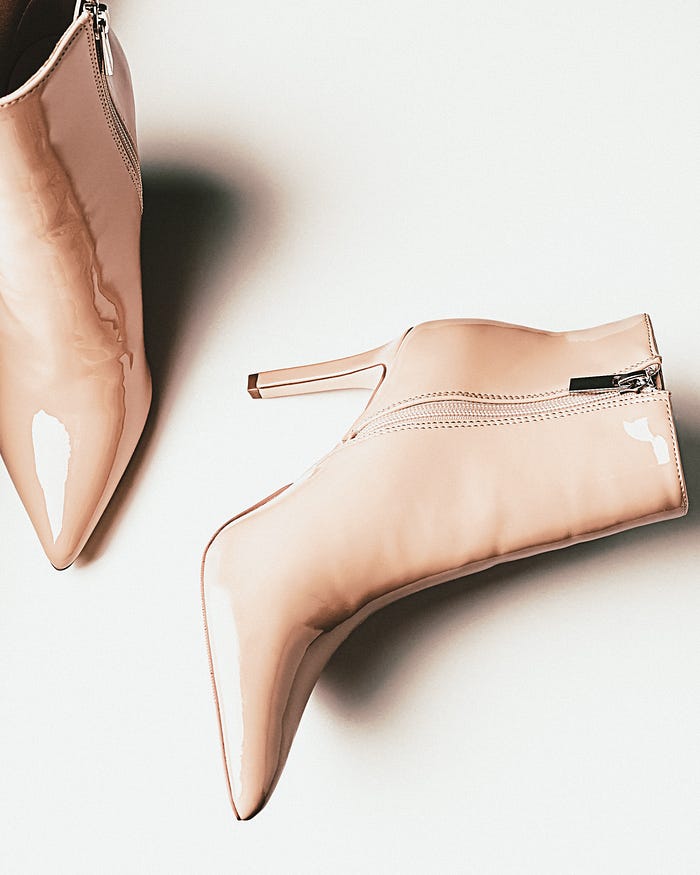
Patent leather should be treated the same way but use a specialist patent leather cleaner.
Store your shoes in their boxes if you don’t have an organised wardrobe with shoe racks. You will easily be able to see the labels on the end of the boxes to identify the contents. Shoes tossed together in the bottom of a wardrobe will look like hell after a few wears.
Have your shoes repaired regularly — don’t let the heels and soles wear down to the uppers or the substance of the heel and the vamp (the top of the shoe) will be damaged. There is a reason for the saying ‘down on your uppers’. Extend the life of your shoes with regular maintenance. You can even get your trainers restored and repaired.
Hanging your clothes
Most hangable items have ribbons or chords at the armhole or shoulder. These are there to take the weight of the garment and prevent marks caused by the ends of the hanger. Choose the right hanger for the item and if there are no internal hangings in your garment either sew in some ribbon or chord. Padded hangers are great for woollens.
If there are no hanging ribbons or chords, a good alternative is to use a trouser hanger. These are great for lots of items such as skirts, halternecks and strapless tops. I also use them for lightweight knitwear hung upside down with the trouser hanger at the hem.
Air your clothes before putting them away. Hang your clothes outside your wardrobe overnight before putting them away, if possible air clothes outside in the fresh air now and then.
Don’t spray perfume on your clothes as it will accumulate and become stale over time. Put your perfume on, then get dressed.

Pleated clothes made from silk chiffon, silk or satin will lose their pleats over time. The pleats will literally fall out of a natural fabric. You can press them back in with a hot iron and steam. Don’t try this with silk or satin acetate as it will melt and crinkle.
The same is true of pure silk velvet. You can identify silk velvet as it draws your eyes deep into the fabric, synthetic velvet has a sheen which reflects light. Use steam and light pressure so as not to crush the pile. Always hang velvet as folding will crush the pile.
Use zippable garment covers to prevent clothes from dust and fading. They also really help with getting clothes in and out of a tightly packed wardrobe and minimise creasing. Transparent ones are best. Some, like suit covers, have a place to slide in a label. Put your out-of-season clothes in these covers and hang a lavender bag inside to deter moths.
Get rid of all your wire hangers! They are the devil when it comes to hanging clothes well. They are great for getting your clothes home from the dry-cleaners but used for anything other than that, involving clothes, should be banned in my opinion.
It’s visually pleasing to me to hang colours together first, then by type of garment. If you aren’t used to doing this, try it and you will discover garment and colour combinations you hadn’t thought of before. You can even go as far as hanging in the sequence of dark to light, or even a rainbow.
Handbags
Buy or make felt slipcases for handbags to prevent scuffing and always store a handbag stuffed with paper to prevent it from losing shape or becoming creased.

Polish handbags regularly to keep them hydrated and prevent the leather from cracking, exactly as you would for your shoes.
Scarves, belts and gloves
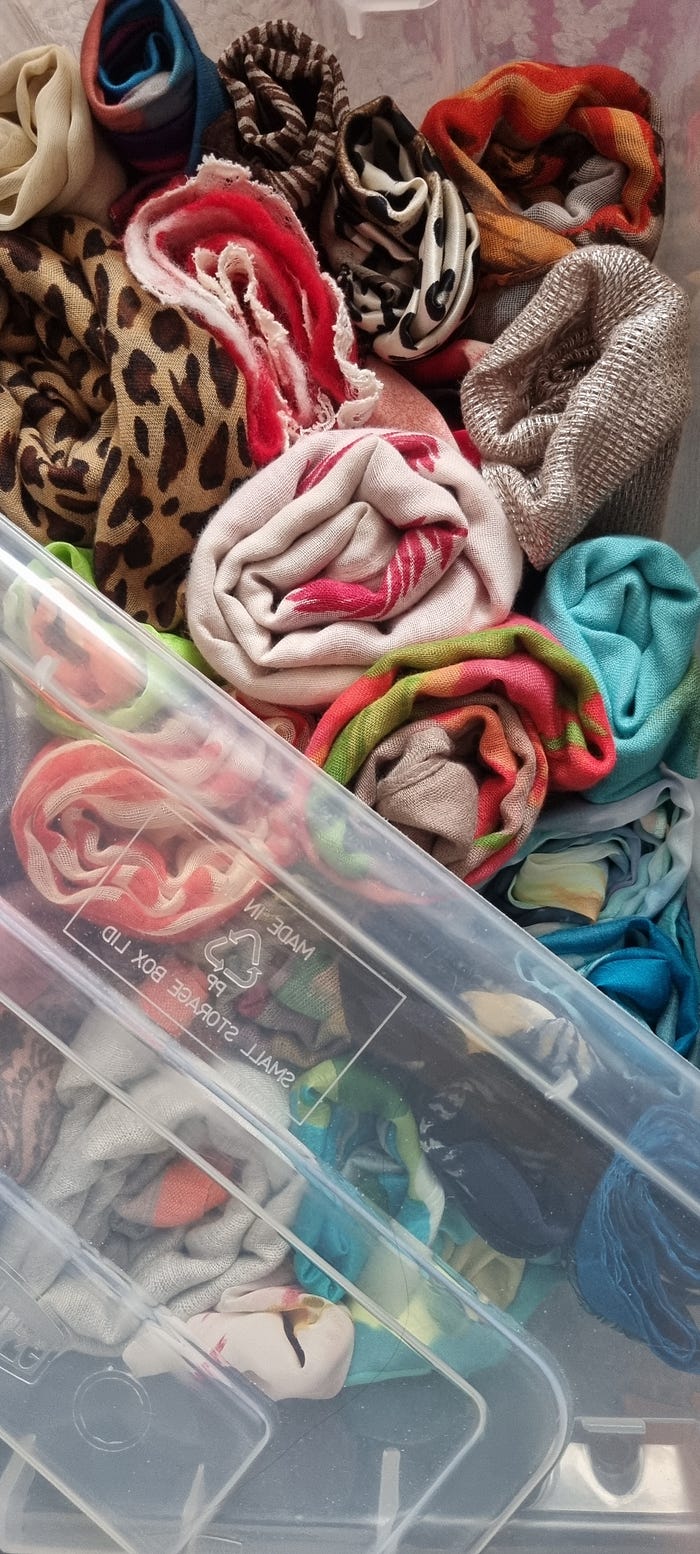
Roll scarves and put them end up in a drawer or a box. You can easily see each one and remove the one you want leaving a space without disturbing the others so you can easily place it back again. I find this so much easier than folding and having to disturb all the scarves to get to the one I want on the bottom.
Belts
Similarly, roll belts from the end without the buckle or fastening and store them in a draw with the fastening facing up.
Gloves
If they are leather, polish them occasionally and store them flat.
Dry-cleaning
The solvents used in dry-cleaning, like Perc (perchloroethylene), can have catastrophic consequences on the environment. It can contaminate water supplies and soil, making them toxic for the animals and plants that live there.
Although bad for the environment, some garments you already own may only be dry-cleaned. Make more sustainable choices when purchasing in the future and keep dry-cleaning to a minimum by gently cleansing the garment with a damp cloth on the areas prone to soiling such as around the collar and armholes.
There is a new technique called wet cleaning, seek out a provider near you: https://blancliving.co/blogs/news/make-the-switch-to-eco-dry-cleaning
The care and maintenance of your clothes is a massive investment financially and environmentally. If you want to be #SustainableMe then it is a major contribution to lessening your impact on our planet.
If you have any clothes maintenance or storage tips, please share them with me, I am always looking for new ideas.
. . .
This article was first published on Medium.com – you can read this and my other articles on my page here .
 elaineflook.online