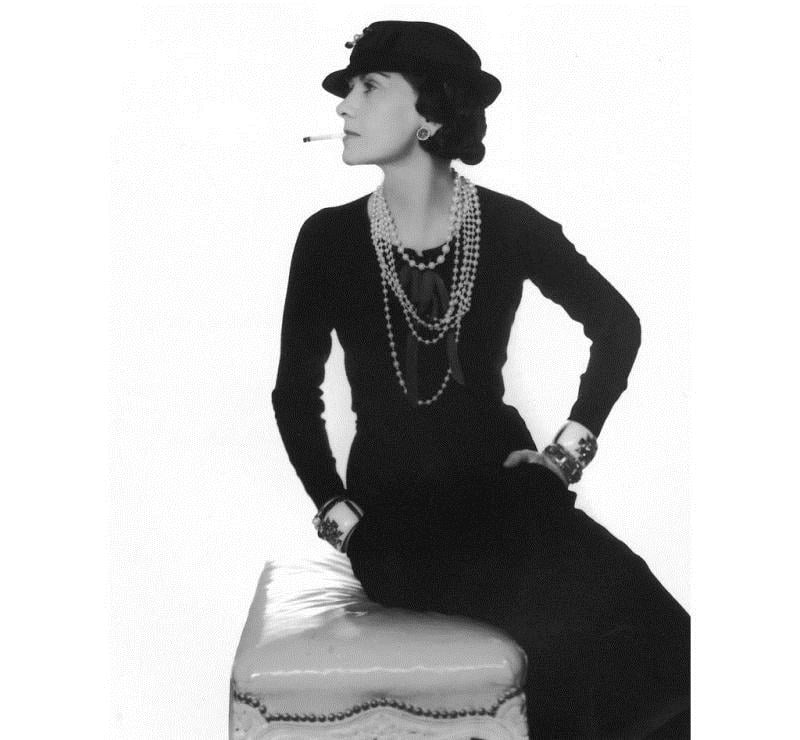
“The frock that all the world will wear …” Vogue, October 1926
We love the little black dress, or as fashion aficionados fondly call it, the LBD. It has been a staple in countless women’s wardrobes throughout history. This reliable icon holds a special place in our hearts, always ready to make us feel fabulous, regardless of the occasion. It blends in effortlessly, a guaranteed go-to outfit that can gracefully navigate any setting, whether glammed up with diamante and stilettos or classic in pearls and flats.
Actually, being a Clear Spring palette myself, I don’t wear black — my go-to is navy blue or dark chocolate but I appreciate the affection women have for the LBD and I have my navy and brown equivalents. I am going to have to break out of my colour palette this coming December as my choir is going to be performing and I will be required to wear one.
As I write, the National Museum of Scotland has unveiled an exhibition “Beyond The Little Black Dress.” It delves into the evolution of the LBD and its profound connection to female liberation since its emergence nearly a century ago. Leading the curation is Georgina Ripley, the principal curator of this magnificent display.
The LBD acts as a time capsule, enabling us to observe a century of social change, and as in the 2020s, we cannot ignore the parallels between our era and the roaring 1920s. Tumultuous times have befallen us, just as they did a century ago. We have emerged from a pandemic, much like they did after the flu. We are grappling with economic upheavals, just as they did. These parallels present a unique opportunity to reflect on a hundred years of social transformation.
As we journey back through time, we gain insights into the political and cultural context surrounding women. The little black dress, with its sombre hue, acts as a mirror, reflecting the evolution of societal values. Take, for instance, the iconic creation of Coco Chanel in 1926.
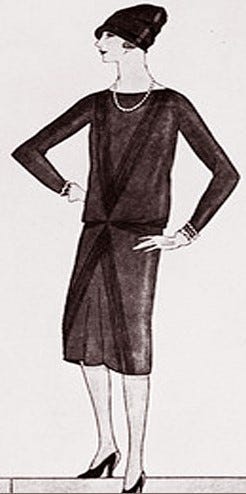
This groundbreaking design epitomized the liberation of women, embracing the greater modernisation happening within 1920s fashion. It borrowed elements from menswear, offering comfort and functionality. The shorter hemlines and the androgynous silhouette symbolised women’s increased participation in urban life. The dress also captured the social anxiety surrounding shifting gender relations and power structures.
In earlier eras, black clothes were associated with servants’ clothes, grief and mourning. From Edwardian times until after the First World War when resources were less plentiful and many, many people had mourned lost loved ones. Wearing black outside of mourning was considered too old a colour for anyone under 30. There was, however, also a desire to move forward from the devastation of World War I and there were those that felt they had seen enough mourning over the many losses of war and rejected black, favouring a more colourful dress. Coco Chanel’s 1926 observation of black in clothing helped to disassociate black from mourning.
These themes persist throughout the following decades, intertwined with the influences of the women’s movement in the ’60s and ’70s. Thus, the little black dress encapsulates the nuances and projections of each era.
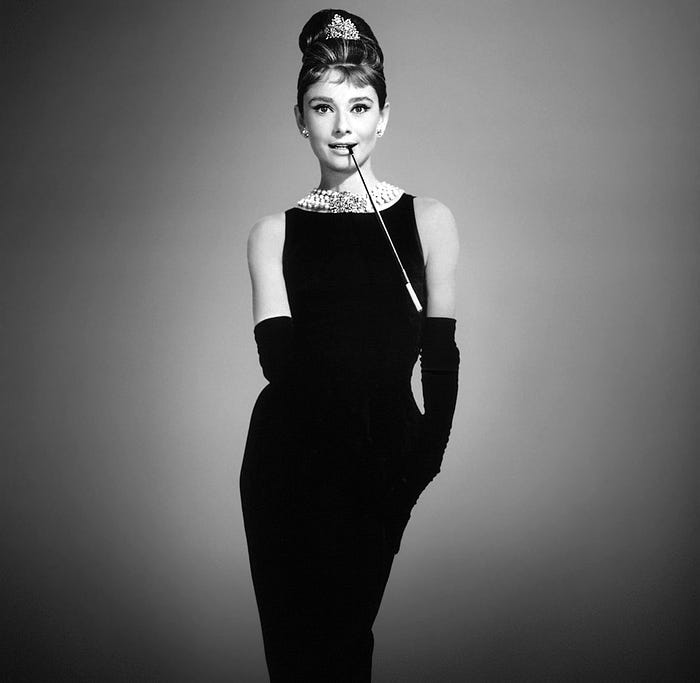
In the ’60s, the little black dress took on new relevance, aligning with changing attitudes towards sex and power dressing. Think of Audrey Hepburn in 1961 as the strident Holly Golightly seen in the opening scene of Breakfast At Tiffany’s in beautiful full-length creation by Givenchy.
In the 1980s, high fashion developed an erotic and provocative association with black and we see the emergence of fetish wear signifiers, subtly interwoven with power dressing. This gave rise to intriguing debates on whether this more sexualized approach objectifies and degrades women or empowers them. The little black dress became a symbol of these discussions. How can we forget Liz Hurley in the now iconic Gianni Versace safety pin dress at the 1994 premiere of Four Weddings And a Funeral?
How do women wear the LBD in the world today? What relevance does it hold in contemporary society?
In the past, wearing black was subject to strict codes of etiquette, dictated by sumptuary laws that no longer constrain us. However, the little black dress endures as a powerful advocate for sustainability, resonating with the timeless ideals that transcend the climate crisis and environmental concerns plaguing the fashion industry. It is a cornerstone of slow fashion, an essential component of a capsule wardrobe. Its versatility ensures its place in the future order of fashion.
The charm of the little black dress lies in its simplicity and effectiveness. Just like the duality of the colour black, it offers different experiences to different individuals. Some find comfort in blending in, feeling almost invisible. Others view it as a blank canvas upon which they project their identity, a foil to their persona. Clothing has the remarkable ability to express our desires, and sometimes, women choose to be invisible, seeking solace in the clothes they wear.
Interestingly, the exhibition dedicated a section to the royals, as their fashion choices often communicate subtle messages. Notable style icons like Wallace, Duchess of Windsor, and Princess Margaret embraced the little black dress, challenging the notion that the royal family refrains from wearing black apart from in mourning. A fascinating addition to the exhibition is the dress worn by Meghan Markle during her interview with Oprah Winfrey. She, too, opted for black attire on many occasions, explaining that it offered a safe choice, an assurance of appropriateness for any given event.
Let’s not forget the emotional resonance that clothing holds for many individuals. The little black dress represents a rite of passage for countless women, a cherished memory intertwined with deep significance. In a world of ever-changing trends, it is crucial to hold onto garments that carry personal meaning and evoke cherished moments. Many women own an LBD bought for them by their mother, owned by their mother, worn at their first Prom etc. and will continue to wear it or hand it on to their daughter.
The little black dress has transcended time and trends, etching its elegant silhouette into the annals of fashion history. From its revolutionary inception in the 1920s to its timeless relevance in the modern era, it stands as a symbol of female liberation and resilience. This iconic garment, like a dear friend, accompanies us on our journey through life, embracing our joys and sorrows with unwavering grace.
 elaineflook.online