
The timeless elegance of a wardrobe staple
The attraction of the white blouse is not just a fleeting trend; it’s a sartorial constant that has weathered the passing of time, through centuries, societal shifts, and fashion fads. From its humble beginnings in the Renaissance as a men’s undergarment to the iconic symbol of the ‘White Blouse Revolution’ in the late 19th and early 20th centuries, this versatile garment has become a timeless wardrobe essential.

The white blouse, initially introduced during the Renaissance, underwent various transformations. The 1700s saw the addition of ruffles and detachable stiffened neckbands, and by 1896, Brooks Brothers popularised button-down shirt collars in the USA. This style, borrowed from English polo players, was eventually embraced by women in the 1950s and has since remained a classic.

It is said that the first emergence of this wardrobe staple for women was in the 1783 portrait of Marie Antoinette wearing a white chemise painted by Elizabeth Vignee-Le Brun which caused quite a stir as the queen was depicted in a plain white garment, which was the equivalent of underclothes at that time. Although not a shirt as such, the garment was a white cotton dress, made from an inexpensive fabric usually reserved for peasants, the polar opposite of the fine silks and lace more worthy of a queen.
To see the queen depicted as such caused quite a scandal — the painting is said to have been portraying the lady as a ‘tramp’. Despite this, it was seen as a fashion lead, as royalty often is, and resulted in white cotton clothing being demanded by the masses.
The white blouse continued to evolve, gaining popularity in the late 19th Century, as women ventured into new employment opportunities, shunning traditional domestic service for cleaner and more respectable jobs.
The 1870 Education Act in Britain led to a major change in the levels of literacy and the latter years of the 19th Century, resulted in women undertaking new types of employment, particularly young women. This opened up new avenues to working women being a clerk or a secretary, working in the new department stores which were springing up rather than the single most common type of employment being domestic service.
This new choice of work was seen as more respectable. It was cleaner and the pay and conditions were often better which gave it a strong appeal. This resulted in an expansion of the service economy in Britain and is often referred to as ‘The White Blouse Revolution’. In Britain in 1881, 6,420 women were employed as clerks increasing to 124,843 by 1911 giving rise to the term ‘The White Blouse Revoloution’ due to their uniform dress of a white blouse, long skirt and buttoned boots.
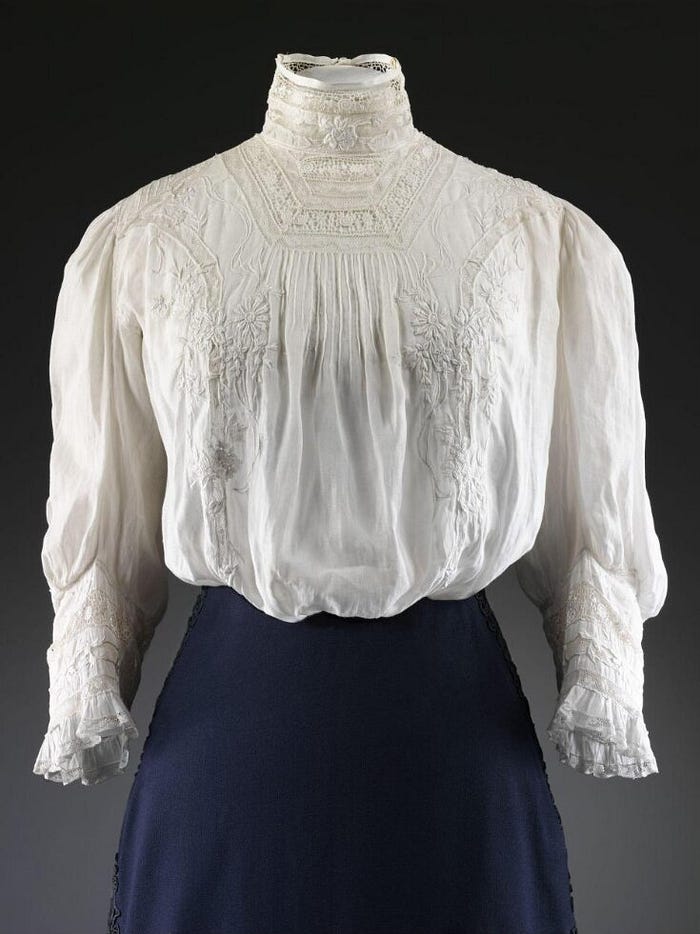
No doubt the woman’s experience of domestic work and making their clothes afforded them dexterity at the typewriter in these new roles as in the late nineteenth century the word typist had come to refer to a woman. Professional women at this time had to be particularly well-groomed and dressed — their white blouses needed to be laundered and collars starched. The white blouse at the time was easier to buy than to make and a ready-to-wear garment was very welcome to a busy professional woman however the quality was questioned. Once laundered, ready-to-wear blouses became corse and the garment lost its shape compared to a good garment made at home which would retain its shape and quality for many years.
The Edwardian era and the onset of World War I further transformed the white blouse, aligning it with the image of the competent, well-groomed professional woman.
Professional women were doubtless grateful for the convenience of a ready-made garment however, the convenience of ready-made blouses came at a cost. The demand for large quantities of ready-made blouses created a ‘sweatshop’ environment. The seamstress’ life was laborious with long days and harsh targets to meet but was a preferred choice from the hardship of domestic service.
A broad range of garments was made from fine work on Japanese silk to less involved Alpaca blouses. The daily production requirement could range from 1 a day to 6 a day and employees were paid by ‘piecework’ however some were paid by the hour but had to work extremely hard for that pay and most were earning under the living wage. Some entrepreneurial women made blouses for private customers, mostly teachers, and freed themselves from the hard sweatshop environment.
Hollywood played a significant role in elevating the white blouse’s popularity with iconic figures like Katherine Hepburn and Lauren Bacall showcasing it on and off-screen.
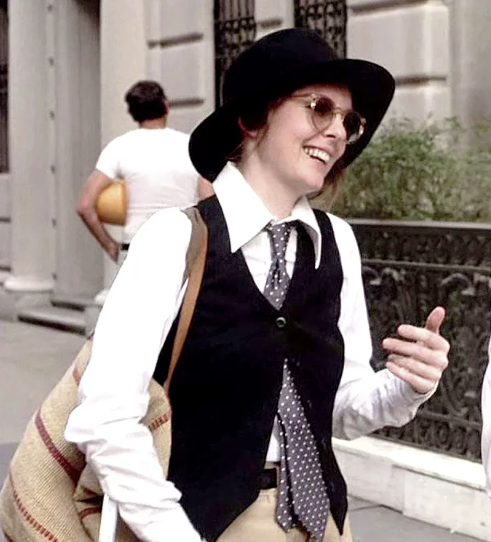
The 1977 film “Annie Hall” solidified the white blouse’s status as a fashion statement, epitomised by the relaxed look of a white shirt, waistcoat, tie, and chinos.
So, why do we continue to love the white blouse?
It’s an easy choice:
A white blouse is a versatile option that effortlessly transitions from the office to an evening out or a casual weekend meet-up. Its adaptability makes it a go-to choice for any occasion.
It works for anyone:
Well almost. It caters to most fashion personalities but choosing the right style for you is crucial. Whether you lean towards classic, gamine, romantic, ingenue, or natural styles, there’s a white blouse that suits your unique taste.

It Goes with Every Colour:
While a bright white blouse complements ‘winter’ tones, softer whites or pale naturals are perfect for ‘spring,’ ‘summer,’ and ‘autumn’ colour personalities. It seamlessly pairs with various colours, elevating your entire outfit.
A Canvas for Statement Pieces:
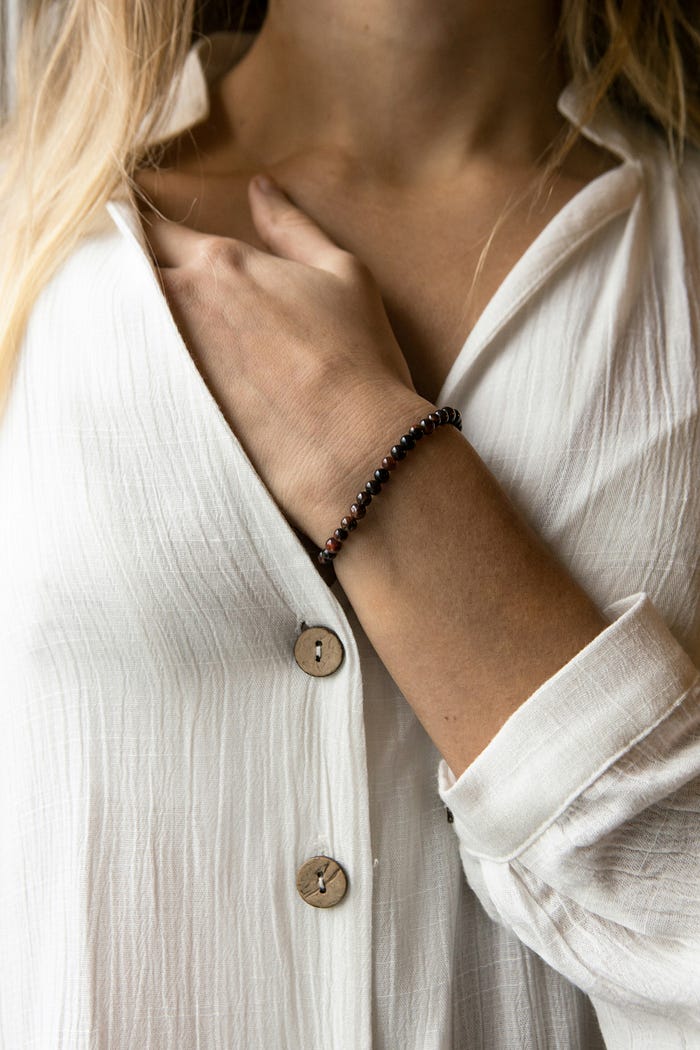
The white blouse serves as a neutral canvas, allowing statement accessories to shine. Whether it’s a necklace, bracelet, watch, or scarf, the white blouse provides the perfect backdrop for showcasing your style.
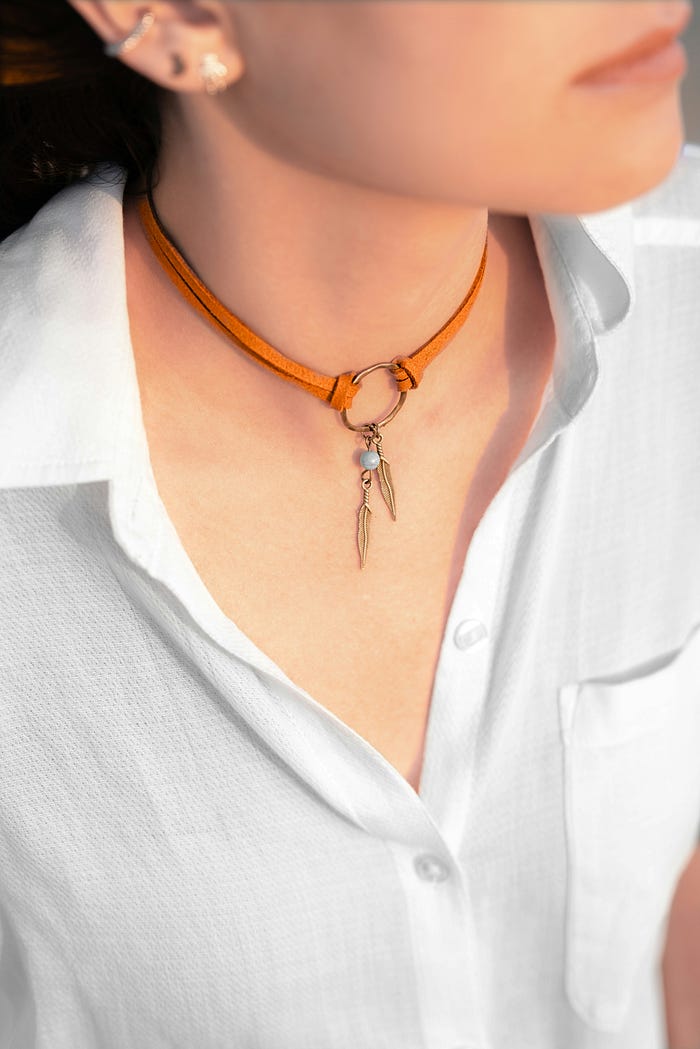
In summary, the white blouse isn’t just a piece of clothing; it’s a symbol of enduring elegance and adaptability. As you embrace this timeless garment, choose styles and pairings that align with your unique fashion personality. The white blouse isn’t a one-size-fits-all; it’s an invitation to express your style in a myriad of ways.
 elaineflook.online