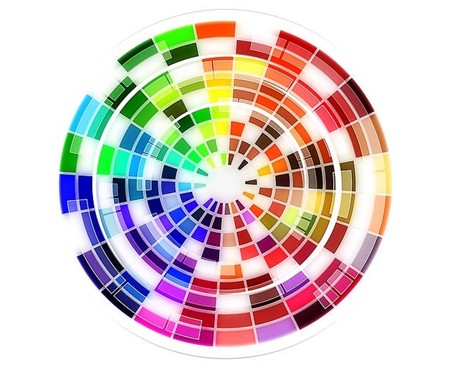
Having your ‘colours done’ contributes to a sustainable way of life.
Colour analysis was very ‘on trend’ in the 1980s. I first had my ‘colours done’ in about 1984. Due to its popularity, there were many colour analysts to choose from, Donna Fuji created her ‘Lumina Color System’, incorporating 25 colour palettes regardless of whether you are Asian, Black, Caucasian or Hispanic, designed to help you discover your own palette of the best colours for you. Mary Spillane created the ‘Color Me Beautiful’ organisation, Europe’s first image consulting organisation, in 1983, which became a worldwide network of thousands of consultants.
After its peak, ‘having your colours done’ was considered old-fashioned and lost popularity, but lately, due to an explosion of interest from social media posts, we are seeing a resurgence of interest and a desire to understand the power of colour. People want to understand how to make themselves look polished and well put together in a way which feels authentic. You want to look great but still feel like you.
My palette was originally defined as Winter. I have dark hair, pale skin and green eyes, a little bit of a Celt. Usually, those attributes are defined as ‘Winter’, but I’m not a Winter. I have since discovered that I break the rules. After my colour analysis, I spent a few years in black, white, ice blue, fuchsia pink and red, the classic Winter colours.
Like many women, my wardrobe was predominantly black because it was easy and I thought it was slimming – however, my second venture into colour analysis revealed that I am a ‘Cool Spring’, which kinda sits between Winter and Spring — and the colours are logical because of that. I break the rules because Cool Springs are usually blue-eyed blondes.
So I exchanged the black for chocolate brown and French navy, embraced camel, and discovered that I look brighter, fresher and younger in those colours — which is one very good reason to get your colours done.
Colour is an expression of who we are. If you feel a little low one morning you might think, “I’ll wear black today so I can hide”. Also, we think black is slimming, which it isn’t necessarily because it depends on the ‘silhouette’ you create with the cut of your clothing.
If you wake up feeling low, dress to change your mood — not to reinforce it. Wear a colour which makes you look vibrant and youthful and full of energy, and it will rub off on you. Colour has a huge impact on your mood.
Once you learn how to choose the right colour for you, you will notice when you see someone wearing the wrong colour because they will look tired and drawn. Then you see them in the right colour for them and you think they look amazing, brighter, awake and vibrant.
What is colour analysis?
Generally speaking it’s a system of determining the colours which suit you best and thereby makes clothes shopping easier. It reduces the number of clothes you have because everything in your wardrobe will go with everything else in your wardrobe.
There are many methods of colour analysis, but the simplest one is working with the seasons; Spring, Summer, Autumn and Winter. Some systems will then drill down to a Cool Summer, Soft Autumn etc and create many sub-sets within the seasons.
Within your season, you are given around 30 colours to work with as a guide to your colour palette; this doesn’t mean you can only wear those colours. This will be your season guide for life. Even when your hair goes grey, your season will stay the same. My season changed from Winter to Spring due to the colour analyst not quite getting it right, not due to any change in myself. Since it is not a science, sometimes people like me, who break the rules, can be difficult to analyse. My partner was told he was an Autumn, I think because he has light brown hair with red highlights and skin with freckles. Actually, he is a Summer but I can see why he was told he was an Autumn.
Colour analysis is based on three things:
Hair colour
Eye colour
Skin colour and tone
Looking at yourself, you can make a 50/50 guess at what you are but analysing factors more deeply will give a definite analysis, as shown in my two examples. A good rule of thumb is to hold the colour to your face and look at the effect of the colour against you — the colours which are right for you will make your eyes look brighter, your skin clearer and more vibrant, and your jawline clearer.
Those which are wrong will make you look tired, drained, sallow and emphasise the lines. Try the test with fuchsia pink and then deep peach, which one makes you look clear and bright? Contrast bright white with cream, and soft navy with black to compare.
Ideally, get your colours analysed. Costs vary greatly from one consultant to another, from £150-£450 in the UK, but if the cost is prohibitive or you can’t find a colour analyst near you, there are many online and downloadable programs which, with AI, are getting very accurate and will even scan fabric when you are out shopping.
An investment in yourself and the planet
Getting your colours analysed will save you money in the long run by not buying the wrong colours and therefore keeping your clothes longer. If you buy a piece of clothing in the correct colour, it will go with all the other pieces in your wardrobe because they will be in the same colourway and tonal value, therefore you will wear it more and keep it longer because it will always look great on you.
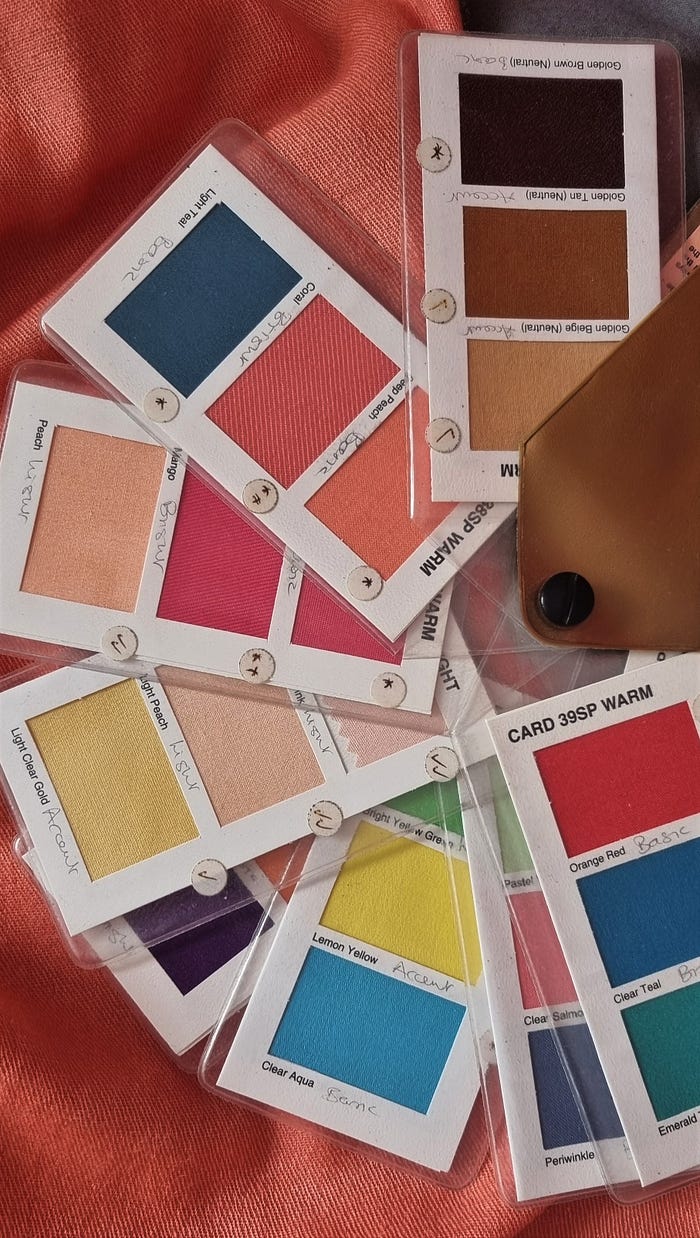
Having only 30 colours to work with would be really limiting so when you get your colour palette don’t try to match the colours exactly. Open the fan and lay a fabric across it, if it is in the same colourway and tonal value then it’s right for you. You can see from the picture below, the coral scarf is not an exact match for the Deep Peach or Coral swatch in my colour palette but it is in the same tonal value and so is going to work with my whole palette and, as a result, my whole wardrobe.
Sustainability
In the last few years, we have raised our awareness of the many ways in which fashion is detrimental to our planet, it’s no longer acceptable to go into a high street store, buy something, wear it a couple of times and throw it away. We should be looking to buy less, and even better, buy more second-hand, to reduce the impact of clothing waste on our planet.
Having your colours analysed is a very effective way of reducing the impact of your clothing purchases and being more sustainable. Combined with buying ethically you can significantly reduce the amount of clothes you need and increase the length of time you keep them.
It is more efficient for you and more sustainable for the planet.
 elaineflook.online